
Life can be hard, and deciding to take an antidepressant can feel like one more big step. You may already be dealing with burnout, depression, or anxiety. Worrying about side effects on top of that makes sense. You are not alone in this, and having questions is a healthy part of taking care of yourself.
The short answer: The most common antidepressant side effects are nausea, headache, sleep changes, drowsiness, dry mouth, dizziness, and sexual side effects. They are often mild, and many tend to fade with time. Serious reactions are uncommon, but they need prompt attention. Contact your prescriber about any severe or worsening symptoms.
This guide covers what is normal, how long side effects tend to last, how they differ by medication type, and when to call. It is meant to educate, not to replace advice from the provider who prescribes your medication.
What Are the Most Common Side Effects of Antidepressants?
According to the National Institute of Mental Health, common side effects of SSRIs and other antidepressants include upset stomach, headache, or sexual dysfunction. SSRIs, or selective serotonin reuptake inhibitors, are a common class of antidepressants that work on serotonin. NIMH adds that SSRIs and related newer antidepressants are commonly prescribed because they improve the symptoms of a broad group of depressive and anxiety disorders.
Here is what many people notice:
Nausea, upset stomach, or diarrhea
Headache
Insomnia, or drowsiness and fatigue
Dry mouth
Dizziness
Restlessness or a jittery feeling
Changes in appetite or weight
Sexual side effects
Why would a mood medication affect your stomach or your sleep? Antidepressants act on serotonin, a neurotransmitter (a chemical messenger), and serotonin works throughout the body, not just in the brain. As the Mayo Clinic explains, nerve cells in the body, primarily in the intestines, also produce serotonin. Serotonin plays a role in regulating the digestive process, blood flow, and breathing.
Side effects vary from person to person and from drug to drug. Having some does not mean your medication is not working. Often it just means your body is adjusting.
Can SSRIs Cause Stomach Upset?
Yes. SSRIs can cause stomach upset, especially in the first few weeks. Gastrointestinal (digestive) effects can include nausea, loose stools, cramping, and appetite changes. For many people, these are among the first side effects to fade.
Timing and food can make a difference. NIMH notes that people who are sensitive to side effects sometimes benefit from starting with a low dose, increasing the daily dose very slowly, and changing when or how they take the medication (for example, at bedtime or with food). Ask your prescriber whether any of these changes fit your medication.
Sleep, Energy, and Activation
Sleep changes are common. Some people have insomnia or vivid dreams. Others feel drowsy or tired during the day. Some notice "activation," a restless, keyed-up feeling in the first weeks.
Different medications can push in opposite directions. Some tend to be more sedating, others more activating. That is one reason your provider may suggest taking a dose in the morning or at night. If sleep problems affect your work or shift schedule, bring it up. Your provider can use that information.
Sexual Side Effects, Weight, and Other Changes
Sexual side effects can include lower desire or trouble reaching orgasm. These side effects of antidepressants are common, yet many people never mention it. Your provider has heard it before, and bringing it up can open the door to other options.
Weight and heart-related changes depend a lot on the medication. A 2025 Lancet review pooled data from about 58,500 participants comparing 30 antidepressants. It found clinically significant differences between antidepressants in terms of metabolic and haemodynamic effects, including weight, heart rate, and blood pressure. Dry mouth, sweating, and dizziness are other side effects worth keeping track of.
Side Effects of Antidepressants in Women (Including Fluoxetine)
Antidepressants are widely used by women. CDC data show that 17.7% of women used an antidepressant in 2015-2018, compared with 8.4% of men. Fluoxetine (Prozac) is an SSRI. Its commonly reported side effects in women are much like those of other SSRIs: nausea, headache, sleep changes, nervousness, and sexual side effects.
A few things are specific to women. If you notice changes in your menstrual cycle, mention them. If you are pregnant, planning a pregnancy, in the postpartum period, or breastfeeding, talk with your prescriber before making any changes. They can weigh the benefits and risks for your situation.
How to reduce Zoloft side effects?
Ask your prescriber about taking Zoloft with food, at a consistent time each day, or at a different time of day if it affects your sleep. A lower starting dose with gradual increases may help some people. Keep a symptom log for appointments. Never adjust or stop your dose without talking with your prescriber first.
Side Effects by Type of Antidepressant
Each type of antidepressant has its own general pattern. Recent NPR coverage of that Lancet study noted that the most commonly prescribed antidepressants in the U.S., called selective serotonin reuptake inhibitors, or SSRIs, tended to have fewer side effects than some older medications.
SSRIs (sertraline/Zoloft, fluoxetine/Prozac, escitalopram/Lexapro): Nausea, headache, sleep changes, and sexual side effects. They are often a first choice.
SNRIs (serotonin and norepinephrine reuptake inhibitors, such as venlafaxine and duloxetine): Side effects similar to SSRIs. A Science Media Centre expert summary of the Lancet systematic review notes that tricyclics, such as amitriptyline, and certain SNRIs, such as venlafaxine and duloxetine, were associated with increased heart rate and blood pressure.
Bupropion (an atypical antidepressant): Possible effects listed in StatPearls include a fast heartbeat, sweating, weight loss, stomach upset, agitation, dizziness, headache, insomnia, tremor, and blurred vision.
Mirtazapine (an atypical antidepressant): Often taken at bedtime because it may cause drowsiness. A National Elf Service summary of the Lancet study lists it among the drugs linked to weight gain.
Tricyclic antidepressants (TCAs): Can cause dry mouth, constipation, blurred vision, and drowsiness. StatPearls advises caution for older adults, who tend to be more sensitive to these effects.
Monoamine oxidase inhibitors (MAOIs): Require food and drug precautions. MAOIs have clinically significant interactions with multiple medications and tyramine-containing foods.
These are general patterns, not predictions. Your own response may be quite different, and no single medication is "best" for everyone.
SSRIs (Zoloft, Prozac, Lexapro) and How to Reduce Zoloft Side Effects
Most SSRIs share a similar profile: stomach upset, headache, sleep changes, and sexual effects. Sertraline (Zoloft) is commonly prescribed to treat depression, and people often ask how to make the early weeks easier.
Here are general strategies to talk through with your prescriber:
Taking your dose with food if nausea is a problem
Taking it at the same time each day
Asking whether a lower starting dose with gradual increases makes sense
Moving the dose to morning or bedtime, depending on how it affects your sleep
Giving your body a few weeks to adjust, while staying in touch with your provider
Please do not change your dose on your own. Your prescriber can help you adjust safely.
SNRIs, Atypicals, TCAs, and MAOIs
SNRIs act on both serotonin and norepinephrine, so your provider may check your blood pressure over time. Atypical antidepressants vary widely. Some are more likely to affect weight or sleepiness, and others less so. NIMH notes that although older antidepressants, such as tricyclics and monoamine oxidase inhibitors (MAOIs), are associated with more side effects, they may be the best option for some people.
MAOIs need extra care. Foods most often linked to high tyramine levels are aged, fermented, cured, or improperly stored products. If you take an MAOI, your care team will give you a clear list of foods and medications to avoid.
How Long Do Antidepressants Take to Work, and How Long Do Side Effects Last?
This is one of the most frustrating parts of starting antidepressants. Side effects often show up before the benefits do. According to NIMH's depression guide, antidepressants usually take 4 to 8 weeks to work, and problems with sleep, appetite, and concentration often improve before mood lifts.
Side effects tend to follow a different timeline. A 2021 study in Translational Psychiatry followed 1,008 adults with major depressive disorder. It found that the frequency, intensity, and burden of side effects were greatest at week 2. Afterward, the frequency and intensity gradually decreased through week 6. So the hardest stretch often comes early.
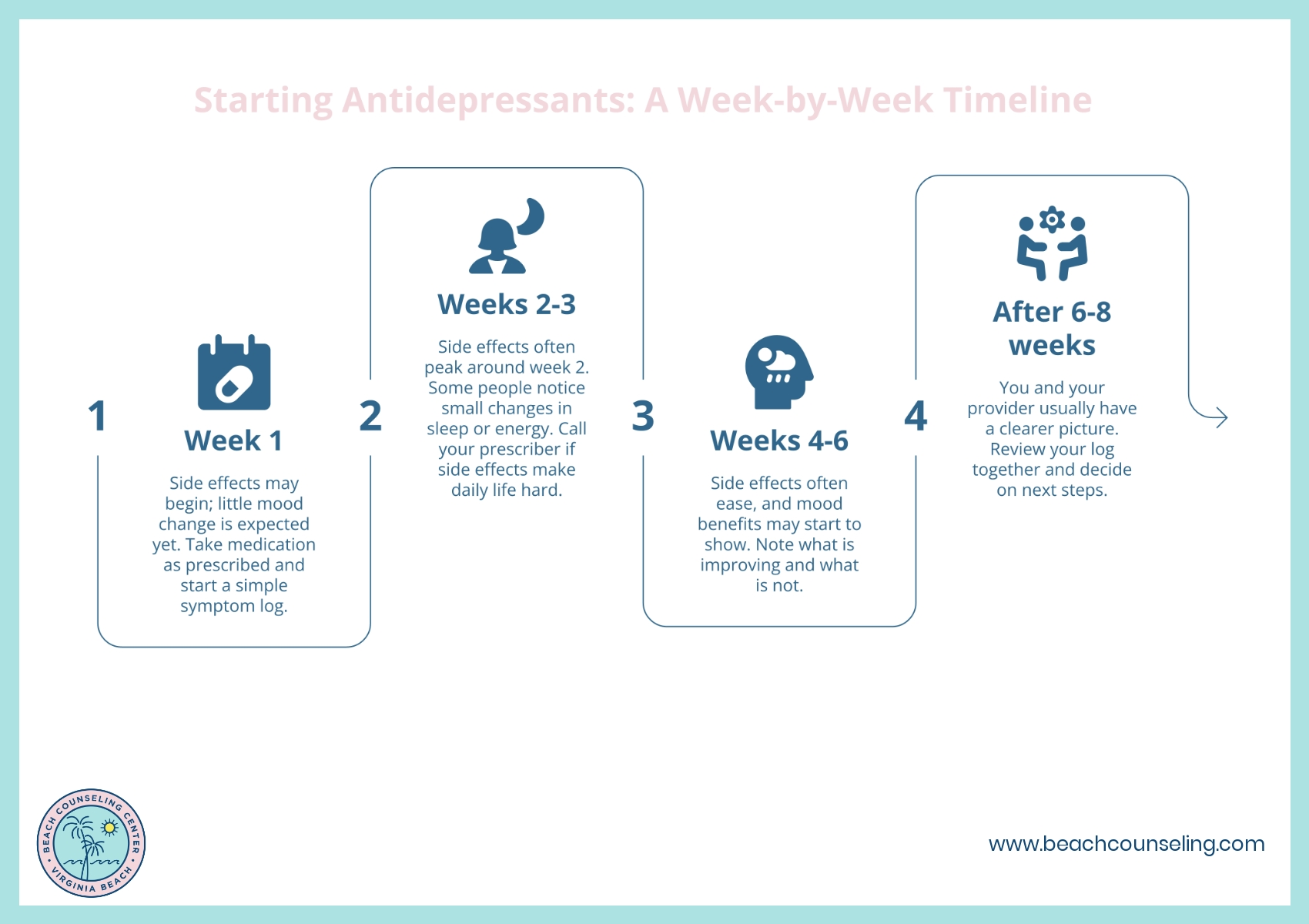
Starting Antidepressants: A Week-by-Week Timeline
Week 1: Side effects such as nausea, headache, or sleep changes may begin. Little mood change is expected yet. What to do: Take your medication as prescribed and start a simple symptom log.
Weeks 2-3: Side effects often peak around week 2. Some people notice small changes in sleep or energy. What to do: Call your prescriber if side effects make daily life hard.
Weeks 4-6: Side effects often ease, and mood benefits may start to show. What to do: Note what is improving and what is not.
After 6-8 weeks: You and your provider usually have a clearer picture. What to do: Review your log together and decide on next steps.
These are averages. Your timeline may be shorter or longer, and that can still be normal.
Why Some People Take Longer to Respond
Dose, the specific medication, how your body processes drugs, and other health conditions can all play a role. Some clinics use pharmacogenomic testing, a genetic test that looks at how you may process certain medications. It is one tool among many, not a guarantee.
Needing a dose change or a different medication is common. Many people try more than one antidepressant before finding one that eases their symptoms and has side effects they can manage. That is not a failure on your part.
Can antidepressants cause weight gain or sexual side effects?
Yes, both are possible, and they vary a lot by medication. Some antidepressants are more likely to cause weight gain, while others tend to be weight-neutral. Sexual side effects such as lower desire are common with SSRIs. These topics can feel awkward to raise, but options exist, so talk openly with your provider.
Common vs. Serious Side Effects: When to Call Your Provider
Most side effects are uncomfortable but manageable. A few are rare but serious. Knowing the difference can help you feel more in control.
Side Effects That Are Usually Manageable
Mild nausea or stomach upset
Headache
Dry mouth
Mild sleep changes
Temporary jitteriness
These often ease within a few weeks. Track when they happen and how strong they are. If they last or get in the way of daily life, let your provider know.
Signs to Contact Your Prescriber Promptly
Worsening mood or new or increased suicidal thoughts
Severe agitation, restlessness, or panic attacks
Signs of serotonin syndrome, such as high fever, rapid heartbeat, muscle stiffness, or confusion
Signs of an allergic reaction, such as swelling, hives, or trouble breathing
Unusual bruising or bleeding
Fainting
The FDA requires a boxed warning on antidepressants. NAMI explains that in 2004 the Food and Drug Administration added it for increased risk of suicidal thoughts or behavior in children and adolescents treated with antidepressant medications. The warning covers young adults under 25 as well, and NIMH advises that people of all ages taking antidepressants should be watched closely, especially during the first few weeks of treatment.
Serotonin syndrome is rare. It occurs most often when people combine certain medications. Severe symptoms need emergency care.
If you are in crisis or having thoughts of harming yourself, call or text 988 to reach the Suicide & Crisis Lifeline, or call 911 or go to the nearest emergency room. The 988 Lifeline is available 24/7, and there is no reason too big or too small to reach out to 988.
How to Manage Antidepressant Side Effects
Small daily habits can make the early weeks easier. Think of these as conversation starters with your care team, not instructions.
Everyday Strategies to Discuss With Your Prescriber
Taking your dose with food or at a different time of day
Sipping water or chewing sugar-free gum for dry mouth
Keeping a regular sleep routine when you can
Gentle physical activity, such as walking
Keeping a simple log of side effects, mood, and sleep to bring to appointments
Alcohol is worth an honest conversation too. Many people drink to cope with stress, and your provider can talk about it without judgment. Drugs.com notes that mixing alcohol and an antidepressant may increase your risk for side effects like dizziness, drowsiness, confusion, and trouble concentrating. With MAOIs, certain beers and wines carry extra risk. With bupropion, alcohol can raise the risk of seizures.
Why You Should Not Stop Antidepressants Suddenly
If side effects are wearing you down, stopping can feel tempting. But stopping suddenly can cause discontinuation symptoms. Cleveland Clinic describes a variety of symptoms like nausea, insomnia, fatigue, and achiness. Some people also feel "brain zaps," brief shock-like sensations.
The good news is that a plan helps. Harvard Health explains that many of the symptoms of SSRI discontinuation syndrome can be minimized or prevented by gradually lowering, or tapering, the dose over weeks to months. Any taper should be guided by your prescriber. Our medication management providers can help you think through options.
Therapy and Medication Together
Medication takes time, and the early weeks can feel long. Talk therapy, such as depression counseling with a licensed therapist, can give you support while your medication takes effect and side effects settle. A therapist can help you build coping skills, track changes, and prepare questions for your psychiatric provider.
Some people do well with medication, some with therapy, and many with both. What matters is finding care that fits you.
You do not have to sort through side effects, timelines, and dose questions on your own. Having a provider who knows your history and follows up with you can make this much easier.
What is the safest antidepressant with the least side effects?
No single antidepressant is safest or has the fewest side effects for everyone. Research shows real differences between medications, and SSRIs are often better tolerated than older drugs. Your health history, other medications, and body chemistry all matter. Your prescriber can help you choose and can adjust the plan if side effects become hard to manage.
Talk With Our Medication Management Team in Virginia Beach
At Beach Counseling Center, medication management means regular visits where we review how your antidepressant is working, talk through any side effects, and make changes with you rather than for you. It suits people who are starting antidepressants for the first time, thinking about switching, or wanting a fresh look at a current prescription.
The practice is led by Dr. Annie Phillips and our team. We offer therapy and psychiatric services under one roof, so your therapist and psychiatric provider can work together. Visits are available in person in Virginia Beach and by telehealth for adults across Hampton Roads, including Norfolk, Chesapeake, Suffolk, and Portsmouth. All care is private and HIPAA-protected.
To schedule, call us at (757) 233-1500 or email info@beachcounseling.com. You can also learn more about Beach Counseling Center's medication management services before you call. Whether you are dealing with depression, anxiety, side effects that will not settle, or you just need extra support, we would be glad to talk it through with you.
