
If a provider has mentioned starting an antidepressant, you might be wondering what all the letters mean. The short answer: SSRIs and SNRIs are both types of antidepressants. SSRIs work mainly on serotonin. SNRIs work on serotonin and norepinephrine, which are two chemical messengers in the brain.
Medication questions can feel like a lot, especially when you are already worn down. Here are the questions people ask most often before a first medication appointment, so you can walk in feeling prepared.
Key takeaways
How they work: SSRIs boost serotonin activity. SNRIs increase both serotonin and norepinephrine activity.
Shared uses: Both are used to treat depression and anxiety.
Side effects: Many side effects overlap. SNRIs can also raise blood pressure and heart rate.
The choice: You and your prescriber make it together, based on your symptoms, health history, and past responses to medication.
This article is for education only. It does not replace a professional evaluation. Please talk with your prescriber before starting, stopping, or changing any medication. If you are in crisis, call or text 988, or call 911 in an emergency.
SSRI vs SNRI: Differences and Similarities at a Glance
Here is a quick side-by-side look at how SSRIs and SNRIs differ.
The two classes also have plenty in common. Both are common first options for depression and anxiety. You take both daily, and it usually takes several weeks to feel the full effect.
What Is an SSRI (Selective Serotonin Reuptake Inhibitor)?
An SSRI, or selective serotonin reuptake inhibitor, is a type of antidepressant that increases how much serotonin is available in the brain. According to the National Institute of Mental Health, commonly prescribed antidepressants include SSRIs, SNRIs, and a few other classes.
How SSRIs Work
Serotonin is a neurotransmitter, a chemical messenger that carries signals between nerve cells. After it delivers its signal, the cell normally reabsorbs it. SSRIs slow that reabsorption process, so more serotonin stays available. "Selective" means they mainly target serotonin.
Serotonin plays a role in mood, sleep, digestion, and more, according to Cleveland Clinic. Researchers no longer see depression as a simple "chemical imbalance," though. Raising serotonin is just one piece of a much larger puzzle.
Common SSRI Medications
Sertraline (Zoloft): Widely used for depression and several anxiety disorders.
Fluoxetine (Prozac): Stays in the body longer than most SSRIs.
Escitalopram (Lexapro): Often used for depression and generalized anxiety.
Citalopram (Celexa): A close relative of escitalopram.
Paroxetine (Paxil): Leaves the body quickly, which can make stopping harder.
These medications differ in how long they stay in your system and how they interact with other drugs. That is one reason a prescriber picks one over another.
Which SNRI is best for anxiety?
Venlafaxine and duloxetine are the SNRIs most commonly used for anxiety. Neither one is best for everyone. Your prescriber considers your symptoms, health history, and other medications when choosing.
What Is an SNRI (Serotonin-Norepinephrine Reuptake Inhibitor)?
An SNRI, or serotonin-norepinephrine reuptake inhibitor, works much like an SSRI, with one difference: it also raises norepinephrine levels. As Cleveland Clinic explains, SNRIs are very similar to SSRIs, but they affect two brain chemicals instead of one.
How SNRIs Work on Serotonin and Norepinephrine
SNRIs slow the reabsorption of both messengers. Norepinephrine plays a role in energy, alertness, and the body's stress response.
That second action may also matter for pain. Both messengers help the spinal cord tone down pain signals. That is one reason some SNRIs are used for chronic pain, as the StatPearls duloxetine review explains.
Common SNRI Medications
Venlafaxine (Effexor XR): Used for depression and several anxiety conditions.
Duloxetine (Cymbalta): Used for depression and anxiety, plus certain pain conditions.
Desvenlafaxine (Pristiq): Related to venlafaxine and used for depression.
Levomilnacipran (Fetzima): Used for major depressive disorder in adults.
Medication for Anxiety and Depression: What SSRIs and SNRIs Treat
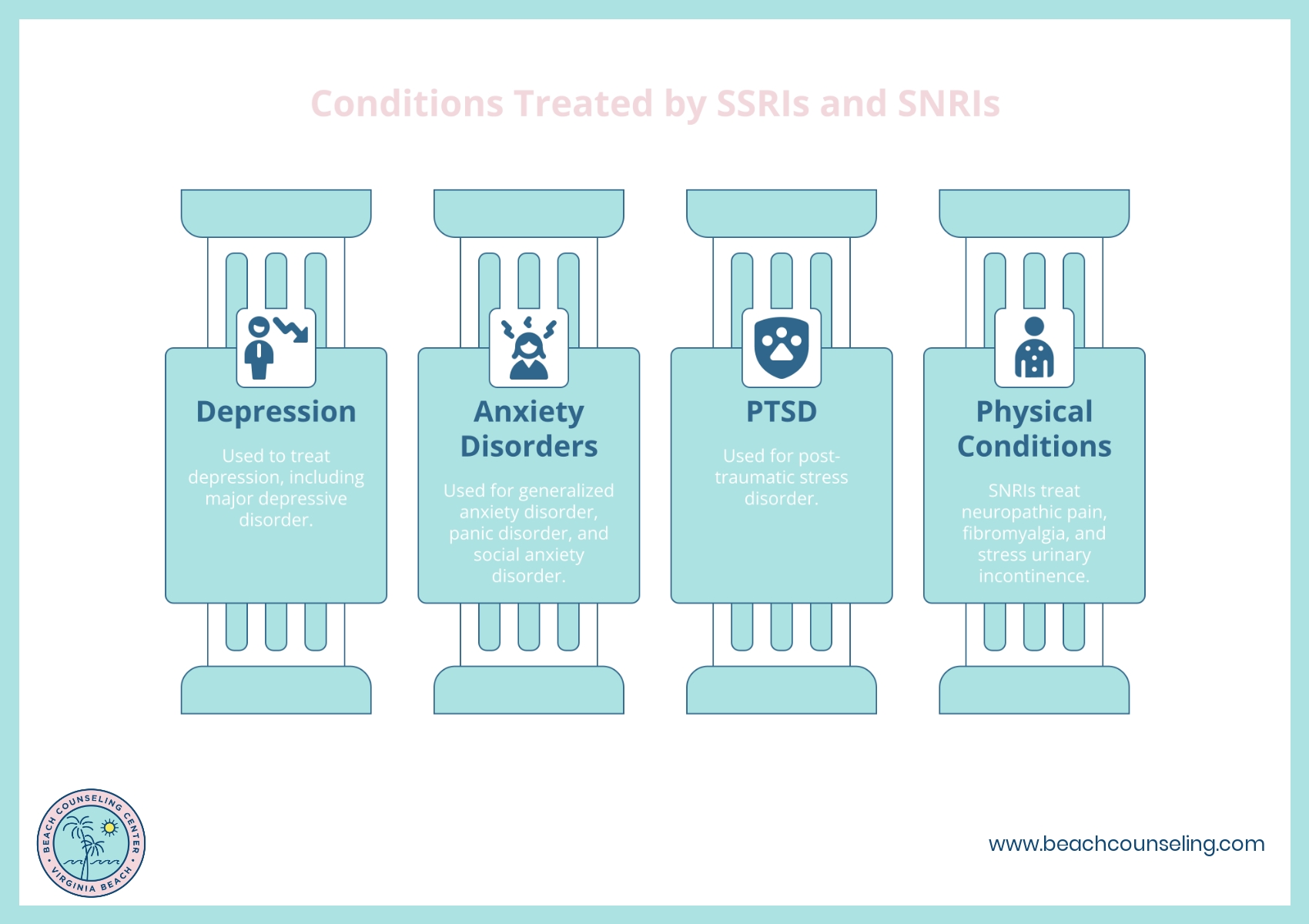
Both classes are mainly used to treat depression, including major depressive disorder. Depending on the medication, they may also be used for generalized anxiety disorder, panic disorder, social anxiety disorder, and PTSD.
The NIMH notes that for panic disorder or social anxiety disorder, providers typically start with SSRIs or other antidepressants because they have fewer side effects than other medications.
SNRIs can also help with some physical conditions. According to a systematic review of duloxetine, duloxetine is approved to treat major depressive disorder, generalized anxiety disorder, neuropathic (nerve) pain, fibromyalgia, and, in some countries, stress urinary incontinence.
Which SNRI is best for anxiety? Venlafaxine and duloxetine are the SNRIs most often studied and used for anxiety. But no single medication is "best" for everyone. The right fit depends on you.
Common Side Effects of SSRIs vs Side Effects of SNRIs
Common Side Effects of SSRIs
Nausea or upset stomach
Headache
Changes in sleep
Sexual dysfunction, such as lower desire or delayed orgasm
Feeling jittery early in treatment
Many early side effects fade within a few weeks. If one bothers you, tell your prescriber. Sometimes a dose or timing change can help.
Common Side Effects of SSRIs vs Side Effects of SNRIs
Common Side Effects of SSRIs
Nausea or upset stomach
Headache
Changes in sleep
Sexual dysfunction, such as lower desire or delayed orgasm
Feeling jittery early in treatment
Many early side effects fade within a few weeks. If one bothers you, tell your prescriber. Sometimes a dose or timing change can help.
Side Effects of SNRIs
SNRIs can cause the same side effects as SSRIs, plus:
Higher blood pressure or heart rate
Sweating
Dry mouth
Constipation
For duloxetine, the StatPearls review advises checking blood pressure and vital signs before treatment starts and monitoring them routinely after that. If you have high blood pressure, mention it at your first visit.
Shared Risks and Warnings
FDA boxed warning: All antidepressants carry an FDA boxed warning about an increased risk of suicidal thoughts and behavior in children, teens, and young adults. If you notice new or worsening mood changes, contact your prescriber right away. If you are in crisis, call or text 988.
Serotonin syndrome: This is a rare but serious reaction that can happen when too much serotonin builds up, often from combining certain medications. Always share your full medication list.
Discontinuation symptoms: Stopping suddenly can cause dizziness, irritability, or flu-like feelings. These symptoms are often stronger with venlafaxine and paroxetine, as the Psychopharmacology Institute notes.
Emotional changes: Some people say they feel emotionally flat or more irritable on an SSRI. Tell your prescriber about this rather than stopping on your own.
Can you take an SSRI and an SNRI together?
Generally, no. Combining them raises the risk of serotonin syndrome. Your prescriber may suggest other combinations or approaches, so ask before you add anything.
Are SSRIs or SNRIs More Effective?
For most people, the two classes work about equally well overall. Small differences show up in some studies, but no class works best for everyone.
Real-world data adds some context. In a large study in The Journal of Clinical Psychiatry, people starting an SNRI were more likely to switch to an SSRI than the other way around (30.8% vs. 10.1%). SNRI users also took lower average daily doses. That study was mainly about stroke risk, so it does not prove one class works better than the other.
Response varies from person to person. That is why the first choice depends on your symptoms, your history, any other health conditions, and how well you tolerate a medication.
Switching From an SSRI to an SNRI
People switch medications for a few common reasons. The first one may not have helped enough, the side effects may have been hard to live with, or they may also have chronic pain.
Prescribers usually make switches gradually. They may slowly lower one medication before starting another, or overlap the two in a careful "cross-taper." For duloxetine, the StatPearls review notes that, when possible, prescribers should lower the dose gradually over at least 2 weeks to reduce discontinuation symptoms.
Please do not switch, stop, or combine antidepressant medications without talking with your prescriber.
How to Choose Between an SSRI and an SNRI: Questions to Discuss With a Prescriber
No article can tell you which medication fits you. Questions like these can make your appointment more useful:
Which symptoms bother me most: low mood, worry, panic, fatigue, or pain?
Do I have chronic pain that one option might also help?
Does my blood pressure or heart history matter here?
Am I pregnant, breastfeeding, or planning a pregnancy?
How did I respond to any antidepressant medications in the past?
Could this interact with my other medications or supplements?
Are SNRIs safe during pregnancy? There is no simple yes or no. You, your OB, and your prescriber should weigh the risks and benefits of antidepressant use during pregnancy based on your individual circumstances.
Therapy and Medication for Anxiety and Depression
Medication is often one part of care, not the whole plan. Many people find that therapy alongside medication gives them skills and support a prescription alone cannot. Medication management and therapy often work best together when your prescriber and therapist communicate with each other.
Are there natural alternatives to SSRIs? Psychotherapy such as CBT (cognitive behavioral therapy), exercise, and better sleep have evidence behind them for some people. Supplements are different. St. John's wort, for example, can interact with antidepressants, according to NCCIH. Talk with your prescriber before making any changes to your treatment.
How long do SSRIs and SNRIs take to work?
Most people need several weeks to feel the full effect. Some notice better sleep or energy sooner. Stay in touch with your prescriber during the first weeks.
Talk Through Medication and Therapy With Our Team at Beach Counseling Center
At Beach Counseling Center, we offer therapy and medication management under one roof. Dr. Annie Phillips and our team of licensed clinicians work together to support you. Our psychiatric providers make all medication decisions with you, and our therapists offer anxiety treatment and depression counseling alongside that care. We see clients in person in Virginia Beach and by telehealth across Norfolk, Chesapeake, Suffolk, Portsmouth, and Hampton Roads, with minimal wait times.
At a first appointment, you can talk through your symptoms, your history, and the questions from this guide, including whether an SSRI or SNRI is worth discussing. To get started, call (757) 233-1500, email info@beachcounseling.com, or use our contact page. You can also learn more about our medication management providers.
